ITRT, kindness

Kindness Share Fair 2021

“How can you be the good in the world?”

I posed this question to the students of Mrs. Cross’ and Mrs. Burgess’ fourth grade classes during our first kindness lesson in September as we distributed Kindness Journals for them to record their thoughts. The question brought forth a multitude of memories as they shared kind acts they had seen, received, or completed themselves. With each book we read, and each lesson completed, we dove a little deeper in our understanding of empathy and compassion. Our biggest discovery was that there’s no “one way” to be the good for those around us; it’s a choice, a willingness, a determination to step out of our comfort zone to connect with another person in a way that uplifts and inspires.

Due to COVID restrictions, our school year has looked very different than years past. While our face-to-face students attend school five days a week, the new rules of mask wearing and social distancing has forced us to restructure various elements of our lessons. No more flexible seating. No more collaborative small group learning experiences. No more sharing of materials. Change, we quickly learned, was something we would have to embrace.

Understanding the complexities of teaching in a pandemic, we had to make adjustments not only to our lessons, but to our grand Kindness Share Fair celebration as well. We adjusted our timeline to complete projects earlier in the year as we knew the semester transition in January would result in shifting of student attendance between our school and the online school. We also knew we would have to redesign our in-person celebration, as visitors were no longer allowed in the building.

In November, we read Ordinary Mary’s Extraordinary Deed and talked about the many ways kindness can multiply from one person to another when shared. We then informed the students that they would receive $10 each to fund a Kindness Passion Project they designed themselves.

They could choose the recipient.

They could choose the kind act.

They could choose how to put good in the world.

Students received their funds in December, thanks to a grant from the Hanover Education Foundation, and together with their families they purchased materials they needed to complete their acts of kindness, documenting the journey with photos and notes.

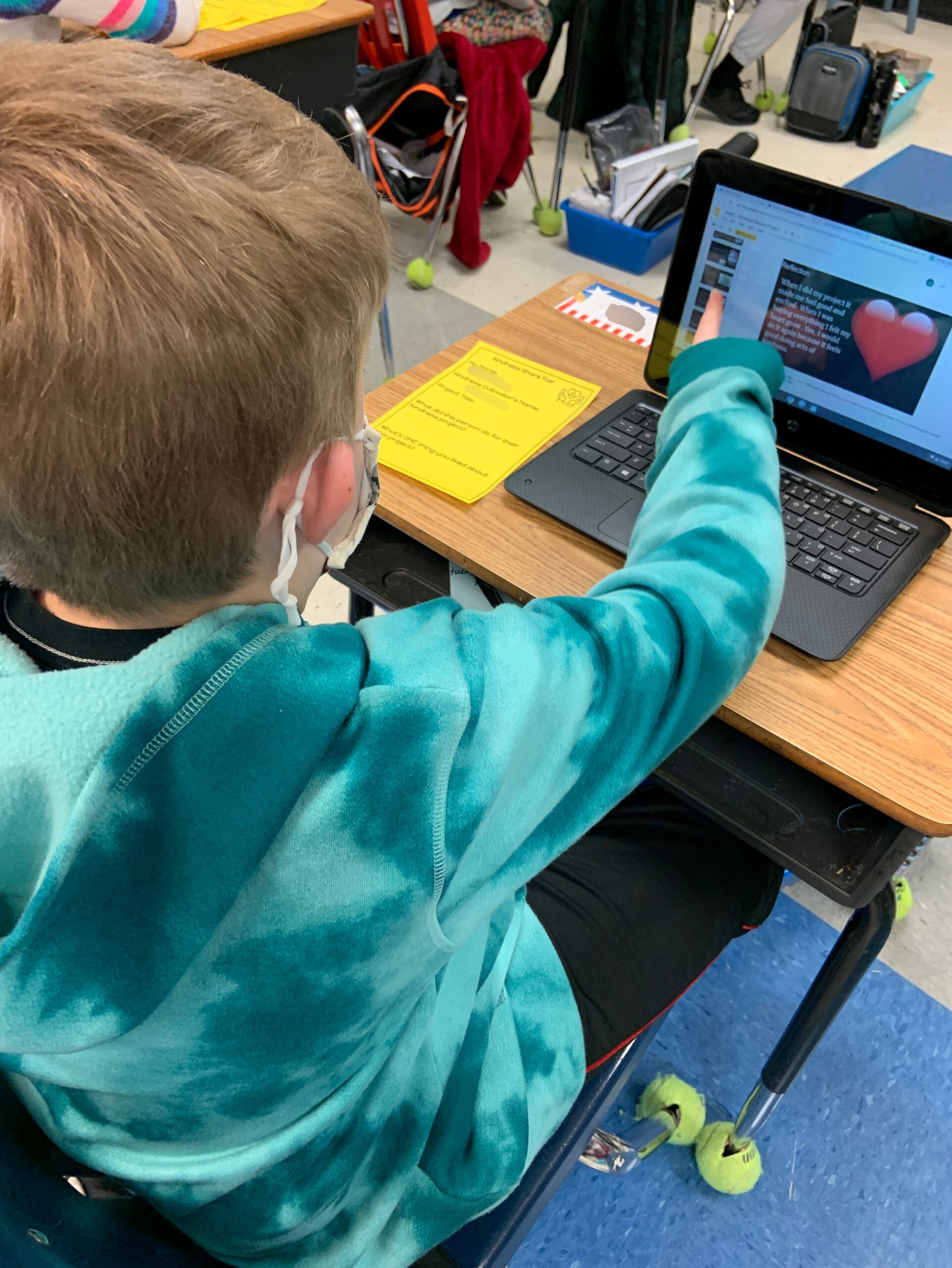
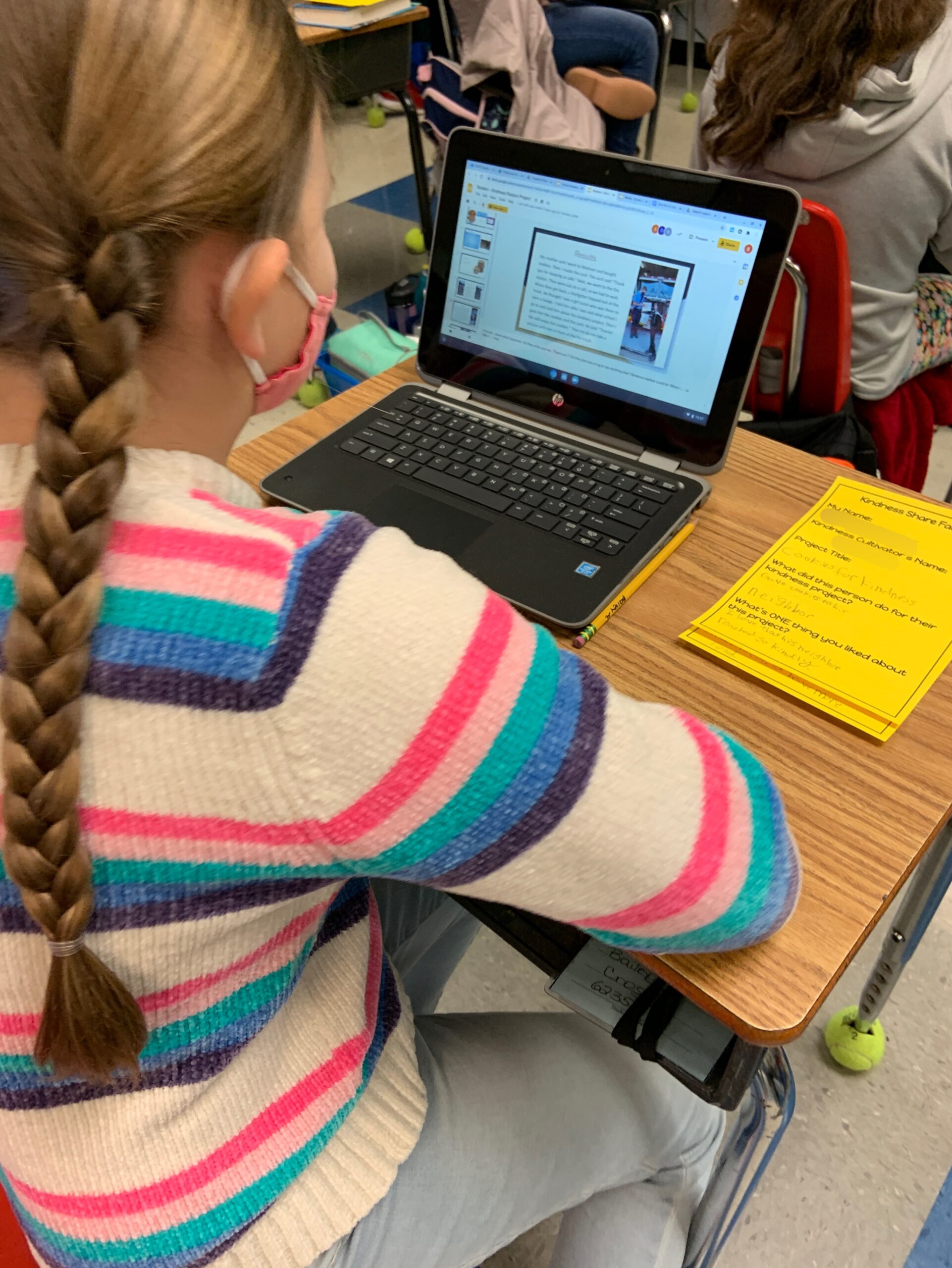
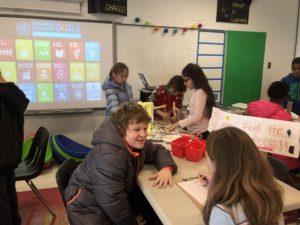
In January, students worked on articulating their experiences through words and images on a Google Slides presentation. They learned how to safely search for copyright-free images on Pixabay, download/upload pictures on their new Chromebooks, and use basic design principles to create presentations they could share with the world.

We set our Kindness Share Fair dates to coincide with Random Acts of Kindness week, with Mrs. Cross’ class presenting first on National Random Acts of Kindness Day (Feb. 17) and Mrs. Burgess’ class presenting the following day. (Note: Due to inclement weather, Mrs. Burgess’ class will present their projects to one another on a rescheduled date, but their projects are live on the website if you want to take a peek!)

If you know me well, you know that I love celebrating everything, especially kindness! I wanted to make this event as memorable as possible, even with the restrictions, so I put into motion one of my favorite Teach Like a Pirate strategies – using music to set the stage for our celebration.

Literally.

As Mrs. Cross was getting students ready with their Chromebooks, I entered the back of the room, playing “Celebration” by Kool & The Gang, shaking colorful pom-poms, inviting everyone to hop out of their seats and dance with us. The surprise of music and dancing brought huge smiles to the students’ faces!
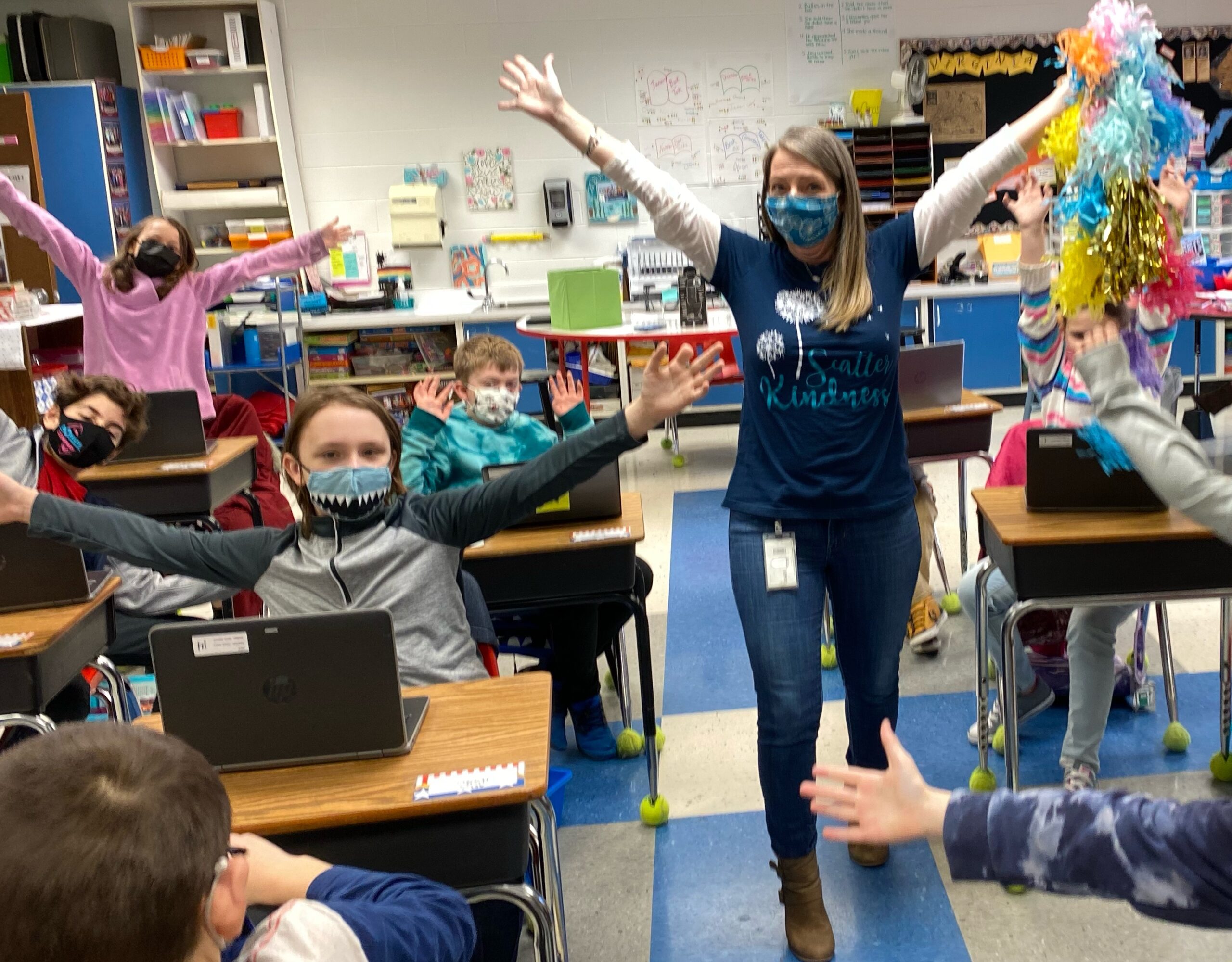
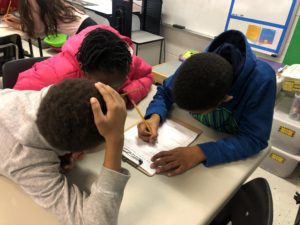
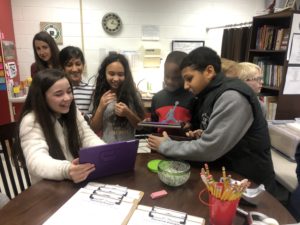
We taped the pom-poms to the whiteboard and took photos of students holding their projects on display. Students were then given a Kindness Share Fair Project Response Sheet to complete as they viewed their classmates’ projects on Schoology for the first time. They recorded their thoughts, sharing what they liked and learned from the projects, with the goal of providing authentic feedback to their classmates.
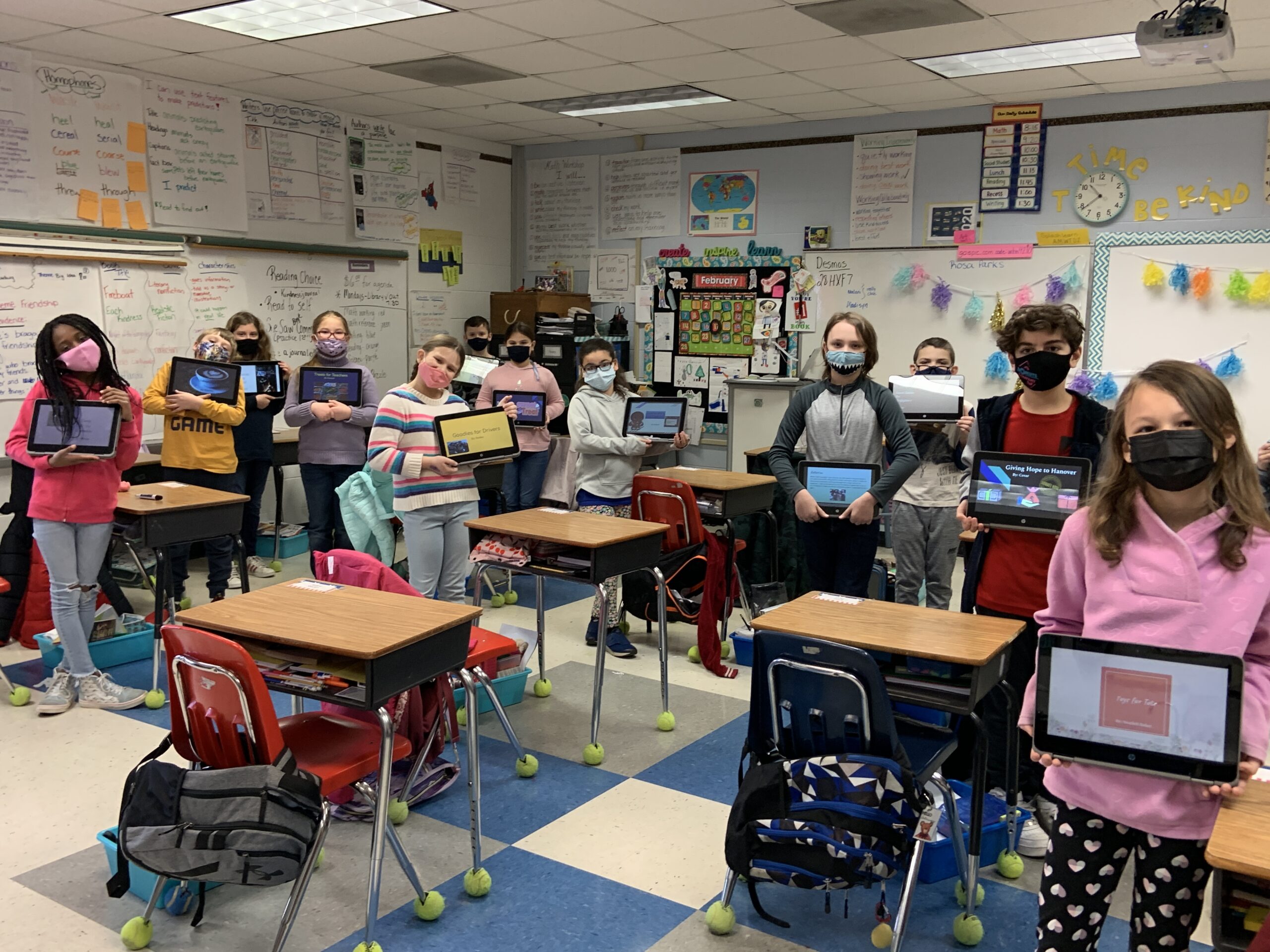
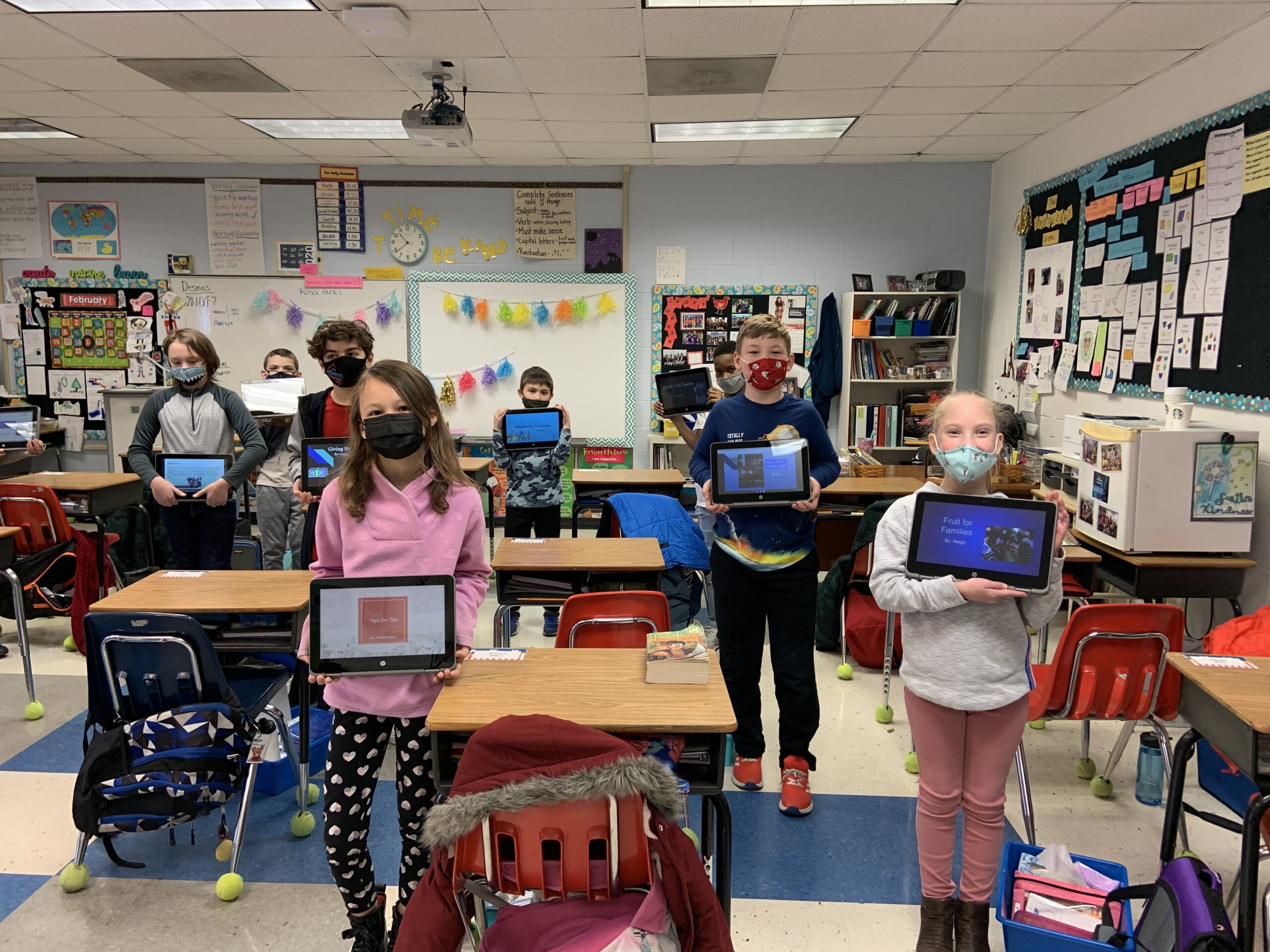
After each student had an opportunity to reflect on several students’ projects, we unveiled our official Passion for Kindness website. Excitement bubbled through the room as students saw their projects displayed alongside those of students who had completed projects years before – more than 150 projects in all!

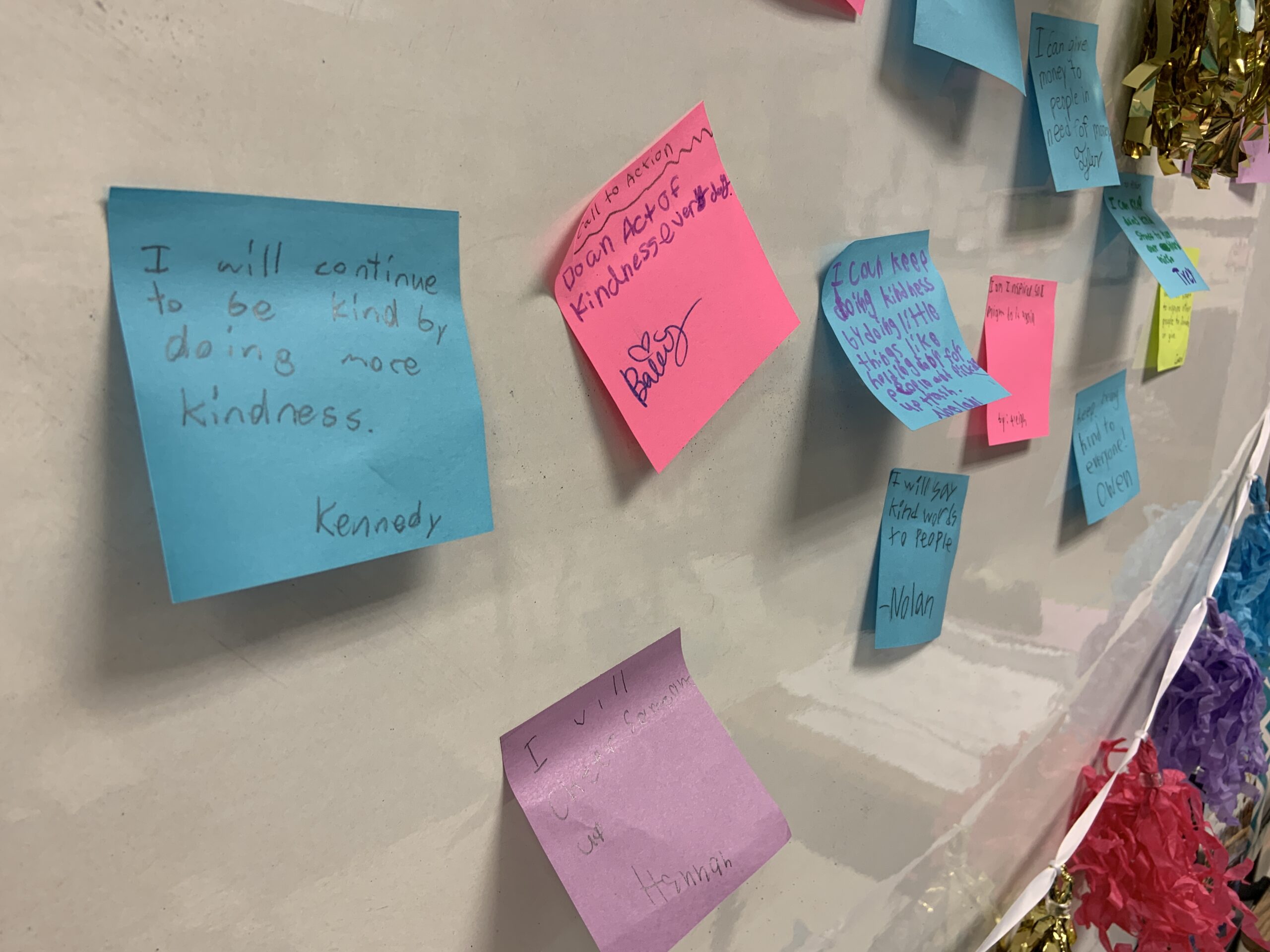
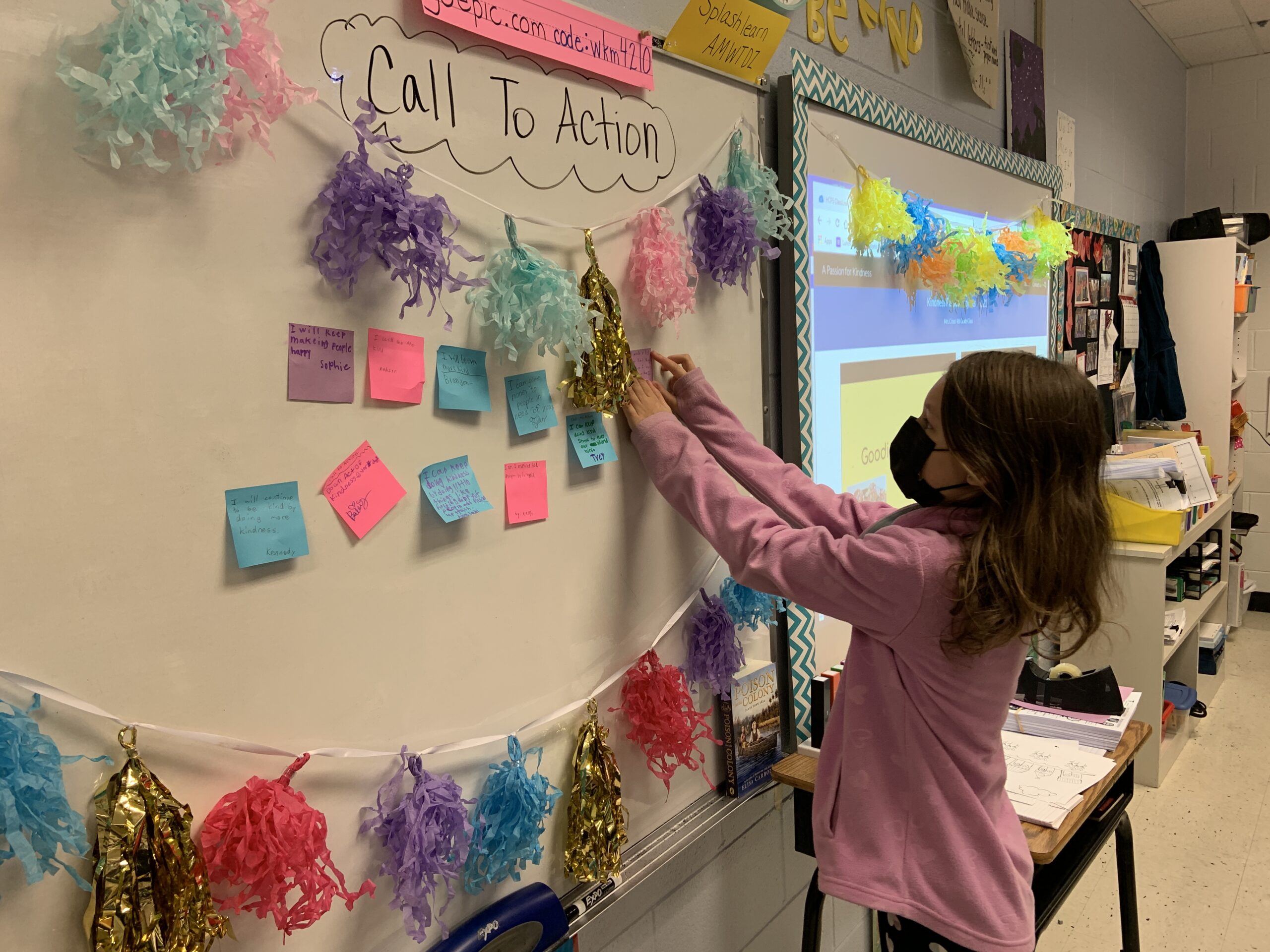
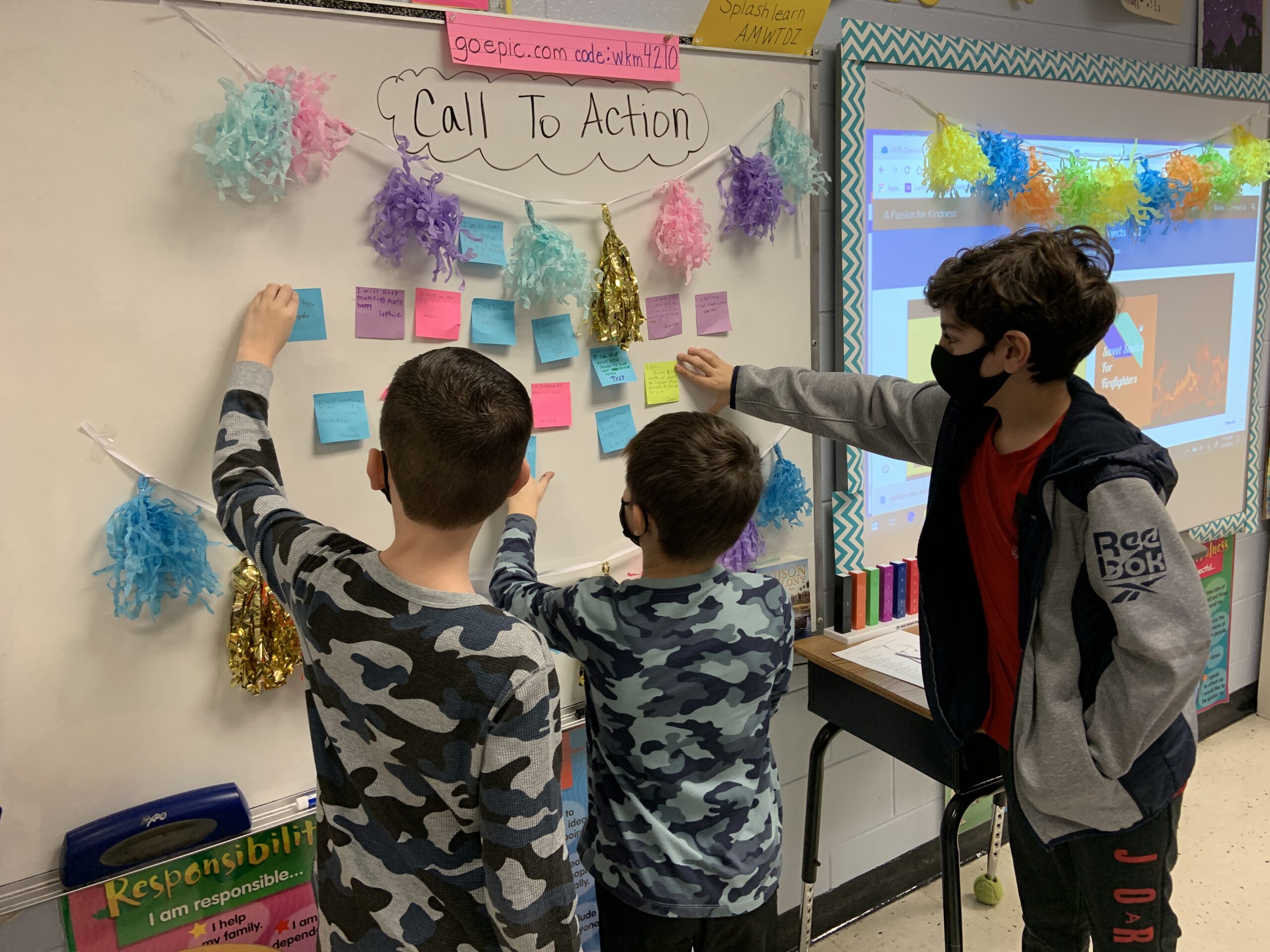
We wrapped up our Kindness Share Fair with students reflecting on their next steps. How will they continue to share kindness in this world? They completed a Call to Action by jotting their thoughts on a sticky note and adding it to the white board.
Everyone agreed that this journey of becoming a Kindness Cultivator has shown us how to be the good in the world. All we have to do is listen to that whisper on our heart then follow through with kind words and actions.

Since our Kindness Share Fair was virtual this year, we are hopeful that you will take a peek at our projects and share your thoughts by commenting on this blog post or sharing your thoughts with Mrs. Cross, Mrs. Burgess, or me (Mrs. Letter). The students know that their projects are being shared with the world and they are very excited to learn more about the impact their kindness has on the hearts of others! If you would like to share our projects, feel free to use this link: http://bit.ly/KindnessPassionProjects.

To view posts of Kindness Share Fairs of the past, please visit the links below. We hope you, too, are inspired to put good in the world!
Kindness Share Fair 2019

Kindness Share Fair 2018

Kindness Share Fair 2017

education, ITRT, reflection, writing

In the Eye of the Hurricane

As far back as I can remember, I have been transfixed by severe weather, specifically thunderstorms and hurricanes. My childhood home included a sunroom, where three sides of transparent glass encased a room filled with floral patterned furniture and a large ceiling fan. Many afternoons were spent in that space, a juxtaposition of calm and serenity as thunder boomed and lightning lit the sky beyond the sunroom walls.

My first trip to Disney World as a teenager ended early due to Hurricane Elena‘s arrival in Orlando, Florida. Years later, I would find myself newly married, living almost 1,000 miles away from friends and family, forced to evacuate my two-bedroom apartment along the Gulf Coast of Florida as Hurricane Alberto (downgraded to Tropical Storm Alberto right before landfall) made its way onshore. The next year, another mandatory evacuation forced me all the way to Georgia, seeking shelter hundreds of miles from our Air Force base housing, as Hurricane Opal, a category 4 storm, crushed the landscape of our coastal town.

Ten years later, my first child would share the name of one of the most catastrophic hurricanes to hit the United States. I recently discovered a home video where I had recorded a Weather Channel broadcast of Hurricane Katrina approaching New Orleans, LA and I still have the newspaper that declared New Orleans spared from severe damage the morning after, just hours before the levees broke and flooded the city.

Daily News-Record newspaper, August 30, 2005

Those closest to me know that I still have “Take a selfie with Jim Cantore” on my bucket list. It’s also no surprise that I was drawn to the story of Jet Stream Jax, an eight-year-old storm chaser from Houston, TX who raised funds to rebuild playgrounds following Hurricane Harvey (and spotlighted in Chapter 3 of my book, A Passion for Kindness.)

I am no stranger to the devastation a hurricane can bring. I have sifted through muck and mire to help others find something, anything, of value left behind. I have watched, helpless, as all my belongings were shoveled out of a storage unit along the New River during my college days, the result of flooded riverbanks from a severe storm. I even attended my own baby shower in 95 degree heat with limited water when Hurricane Isabel left my hometown without electricity for more than a week.

Richmond Times-Dispatch newspaper, September 2003
Opening presents and playing Bingo with no power.
Notice the newspaper headline near my chair.
A page from my scrapbook, documenting the hurricane-impacted festivities.
My sweet Aunt Edith, determined to keep the punch cold no matter what!

My Grandma Payne used to joke that I brought rainy days wherever I went. Our yearly family picnics in the mountains are preserved with snapshots of windshield wipers, rain-soaked views of mountains, and a kaleidoscope of umbrellas covering soggy fried chicken and biscuits. Even the Virginia State Fair, which includes my birthday week, gets rained out year after year. My first week living in Las Vegas resulted in more than four inches of rain – a record for the desert that time of year.

And yet, I find my greatest peace in the midst of the storm.

There is a line from the musical, Hamilton, that makes my heart skip a beat each time I hear it. “In the eye of the hurricane, there is quiet… for just a moment… a yellow sky.” If you’ve ever seen the play or the movie on Disney+, you might remember this pivotal scene as Alexander Hamilton is crushed by his own demise, the storm of his personal choices and circumstance swirling around him when suddenly everything stops.

Time freezes.

Movements halt.

But the ground is not still. It continues to circle around, even as everything is paused for the moment. People and objects begin to slowly swirl in their silence as the audience is catapulted right inside the middle of the storm.

This is where my life is right now.

I am standing in the eye of the hurricane.

The past eight weeks have been nothing short of a hurricane in my world. My work as a technology integrator and instructional coach has swept me away with rain bands of responsibilities, flooded by requests for support and success.

I have tried to seek shelter from the storm, but right when I reach the line of safety, another gust of wind knocks me off my feet, unbalanced, as I am pulled back into the chaos. I am sacrificing family time for timelines of others, a tactic of survival, not sustainability.

It’s also birthday season in my world, with all three of my children, myself, and several nieces, nephews, and extended family celebrating birthdays each week from the end of August to the end of October (with a few more scattered in November.) This is always a busy time, as my priority for celebrating loved ones takes center stage. This year, however, the stage is an eye wall of unbalanced metrics, with the eye of the hurricane shrinking smaller in the midst.

But I made it to the middle.

I am standing in the eye.

There is silence.

Stability.

Security.

Even if only for a moment.

I take a breath.

I stop and stand in awe of the world around me.

I look to the sky for the sliver of sunlight that streams through the clouds.

I am reminded of my purpose.

My passion.

My perspective.

My value.

And as the winds start to shift with the weight of elections, COVID concerns, holiday seasons, and racial divides, I am reminded that no storm lasts forever.

I can seek shelter if needed.

I can battle the winds that remain.

I can survive the rising water with my head held high.

I can.

I can.

I can.

And you can, too.

Subscribe

Don't miss a post! Opt-in for blog posts to be sent straight to your inbox!
ITRT, reflection

Living My Best Life

Transitioning from summer-mom mode to working-school mode in August is always a challenge. The warp speed from 0-60 mph happens so quickly you can almost feel the whiplash before it happens. Being an educator and a mom is a balancing act that always get toppled at the start of the school year. As much as I want to be there for my own children, I know that all my time, energy, and effort has to given to my work at school.

This year has brought even greater challenges on top of those that already exist. We are still in a pandemic. We are called to be stronger allies to our Black friends and other people of color. There are residual effects from our students being out of school for so long and we are now asked to lead, love, and learn in ways we never knew possible. And for me personally, I have battled a kidney stone and shingles all within the past few weeks.

There is stress.

There is anxiety.

There is frustration, anger, and even at times despair.

There have been moments where I have been so overwhelmed, being pulled in so many directions, that I have wanted to fall to the ground, stretch out my arms and legs and pound them as hard as I could – an adult version of a toddler tantrum. There have been other times where it took every ounce of energy not to crumble in a corner and cry.

But if you were to ask me on any given day how I’m doing, you might here one of these refrains:

“Thanks for asking! I’m hanging in there!”

“Whew! It’s crazy busy, but we’re doing the best we can!”

“It’s all good… just living my best life!”

While some might argue that those responses are generic and not a true representation of how I’m feeling, I would argue that those statements are true, not simply a Pollyanna platitude.

I am hanging in there.

I am doing the best I can.

I am living my best life.

This morning, that last sentence made me stop and reflect. What does it really mean to “live my best life?” Am I really doing that? If I left this world tomorrow, would those around me look at my time here on earth and agree that I lived my life to the fullest?

Maybe not today.

Maybe not even this week or month. (And most certainly not this year, heavens no! I am ready to kick 2020 to the curb!)

But, what about my life?

What about yours?

Are you living a good one? Have you made some happy memories along the way? Are there moments that bring you such incredible joy that you smile when you replay them in your mind?

Have you made a positive impact on someone else during your life? Have you reached a milestone, an accomplishment, a challenge where passion and perseverance revealed your strength and sustainability?

It’s ok to have an awful day.

It’s ok to feel all those negative feelings and bear the weight of the world on your shoulders.

Just remember that you are living your best life, and all those moments wrapped up together are what make living so incredible.

Keep going.

Tomorrow is a new day.

You can do hard things.

And one day you might find yourself saying, “I’m living my best life,” and realize it’s absolutely true.

Subscribe

Don't miss a post! Opt-in for blog posts to be sent straight to your inbox!

education, ITRT, kindness, REBkind, reflection, travel

We Rise Together

Those closest to me can probably remember when I added “Become a Keynote Speaker” to my life-long bucket list. I had spent several years sharing my educational experiences at local and state conferences, but hadn’t yet been invited to share my story to a large gathering. I was a novice to the main stage and, quite frankly, a bit intimidated at the thought of being front and center with everyone in attendance staring back at me.

In 2015, I checked that bucket list box when a woman contacted me and asked if I would like to keynote a childcare conference in our local community. I jumped at the chance.

It was the first time I wore a wireless microphone.

It was the first time I had a full-fledged panic attack at the thought of forgetting what to say.

It was the first time I realized my story could impact others on a professional and personal level.

My first keynote presentation: “Connections That Count”

Since that time, I have been a keynote speaker for several conferences, each with their own unique flair. As a full-time educator currently serving students and staff at two elementary schools, my school-year schedule fills up quickly, so I have discovered the necessity to schedule events several months, even up to a year, in advance. This has required me to be very selective regarding which opportunities I accept.

This week I had the honor of being a keynote speaker at the Women Education Leaders in Virginia (WELV) conference in Charlottesville, Virginia. In preparation with conference organizers, I was humbled that they chose the subtitle of my book as their conference theme: Lead, Love, and Learn. Wow! Talk about a compliment! I was floored!

My presenter badge with the conference theme Lead, Love, and Learn

As I prepared my keynote, “The POWER Paradox: Leading with Empathy and Compassion” I thought of the women who would be in attendance. Many were Superintendents, Assistant Superintendents, and district leaders from school divisions all across Virginia. Some were teacher-leaders in their schools, aspiring to rise into roles of leadership in their respective districts. How could I inspire them when they were tasked daily to inspire others?

It’s quite easy to fall prey to imposter’s syndrome when preparing to share your story, whether it’s through a keynote presentation, a published book, or even a pre-recorded podcast. In a study shared in The Journal of Behavioral Science, researchers concluded that nearly 70% of respondents had battled feelings of inferiority, attributing success to coincidence or luck, not because of the valuable contributions made and shared. Imposter’s syndrome whispers lies of incompetence to push down and paralyze, but it’s one of those battles rarely discussed in open spaces.

I worked on my presentation on nights and weekends, often jotting down thoughts in my turquoise, spiral-bound notebook. (Yes, it’s true. I’m a technologist with a weakness for top-notch school supplies, including college-ruled paper!) When I found articles of interest, I emailed them to myself and I read many books to gain a greater insight to the message my heart needed to share.

The more I prepared for my presentation, the more I pondered the impact of my words. Would my purpose resonate on the hearts of others? Would attendees be moved to take action in their schools and districts? With each passing day I would create, edit, and revise. In essence, my keynote quickly became an extension of my book, A Passion for Kindness, allowing me the opportunity to elaborate on stories briefly mentioned and showcase additional stories untold. It wove through the paradoxical challenges of serving in leadership positions and the ways we could still rise up with strength, empathy, and compassion.

As the conference opened to a sold-out crowd, I took the stage and looked out among the faces of so many powerful women. It was in that moment that I knew I was exactly where I needed to be. Their smiles of encouragement immediately put me at ease; their laughter at my southern vernacular reminded me that I was in a safe, encouraging place.

Many thanks to Jennifer Cavanaugh for capturing and sharing this photo during the keynote!
The middle of the room. Talk about an engaging crowd! They were fabulous!
Ladies on my right
Ladies on my left

For ninety minutes I shared my heart with these incredible ladies and when my keynote came to a close I was humbled to see not one, not two, but an entire room rise to their feet in applause for the message shared. It was an unexpected gesture of kindness that filled me with awe.

As the conference continued with inspiring and empowering learning sessions, led by women leaders from a multitude of school districts, I was reminded again and again of one of my favorite quotes by Robert Ingersoll: “We rise by lifting others.” The conversations we shared were heartfelt; the selfies radiating the joy of rising together for a common cause. We were here to be the best we could be for students, staff, and communities we serve each day. We were unified by our vision and purpose.

Loved spending time with fellow DBC author, Lynmara Colรณn, and the joyful Jarcelynn Hart!
It took us two keynotes to finally get our selfie, but always such fun to see Krystle Pearson!
Loved capturing a selfie with Ginny Gills!
“Smiling is my favorite!”

See, I would not be in the position I am today were it not for the women who came before me, paving the path. And while there are still gender disparities in this field of educational leadership (and public speaking!), I am thankful for each and every opportunity I have to share my story with others. It is only fitting that today, on International Women’s Day, I spotlight this amazing organization and the women who make it soar.

Pam Moran, retired Superintendent for Albemarle County Public Schools and 2015 Virginia Superintendent of the Year, was one of the first to endorse my book, A Passion for Kindness. Her book, Timeless Learning, was released in August 2018.

Many thanks to the WELV members who graciously accepted me as one of their own and continually poured into my soul with their kindness, grace, and thought-provoking conversations. I may have arrived at their event as a keynote speaker, but I left as one of their own.

Thanks also to the Pierce Group Benefits who sponsored the purchase of 150 books so every conference attendee could be uplifted and inspired with A Passion for Kindness.

The next time you have an opportunity to lift up someone else with your words or actions, don’t hesitate. Go and do. Your vote of confidence in what they have to offer the world may be the one thing needed to push them forward to greatness.

We rise together.


Subscribe

Don't miss a post! Opt-in for blog posts to be sent straight to your inbox!
education, ITRT, kindness, REBkind

Be the I in Kind

Often when I am traveling and speaking, people will ask, “How do you teach about kindness when you don’t have a class of your own?” It’s the spark of a rich conversation focused on key elements of my role as an instructional coach and technology integrator. Simply put, I collaborate with teachers and administrators daily! By working together, we can create new learning experiences for students that weave kindness with skills and content they are already learning. It’s one of the most rewarding aspects of my job!

This month I had the pleasure of collaborating with the librarian, Kristy Banton, and gifted and talented (GT) teacher, Maureen Ambrose, at Mechanicsville Elementary. The PTA sponsored a musical performance by the Virginia Repertory Theater based on the book, “Have You Filled a Bucket Today?” by Carol McCloud and Kristy wanted to provide an extension of this experience to continue the focus on kindness. Maureen and I quickly agreed that collaborating together would maximize our impact!

Planning

Through our instructional planning, we designed engaging and meaningful station rotations (a focus for our school), offered opportunities to use technology, and included a service-learning activity. We planned one week full of differentiated activities by grade level groupings and named it “Caring Cardinal Days” to represent our school mascot and character education program. We also planned out the logistics of purchasing/securing materials, how long each station would be, and who would be in charge of time keeping so we would be fully prepared for implementation.

Our station rotations included the following (all students completed the Unmasking Kindness Quiver Masks station):

  • Kindness Buckets (K-3) – Students created a paper bucket from brown lunch bags, decorated, and wrote kind compliments for others to put in buckets to reinforce writing skills.
  • I Can Be Kind Digital Posters (K-3) – Reflecting on our school values to be safe, be responsible, and be respectful, students discussed how kindness fit into these categories. They used an I Can Be Kind activity template in Seesaw which allowed them to create a digital poster they could color and record examples of being kind.
  • Unmasking Kindness Quiver Masks (K-5) – Reflecting on kindness books that had been read to students prior to our lesson, students discussed the power of using kind words. They colored a Quiver Masks printable and used the Quiver Masks app on iPads to record a kindness sentence from one of the books to practice reading fluency. Videos were then uploaded to Flipgrid for easy sharing with parents! (Here’s an example of one class’ Kindness Masks.)

Alternate activities for Grade 4 and 5 students included:

  • Service Learning – Makerspace Blankets (4-5) – Students worked with a partner to measure and cut 3″ strips along the edge of a 30″ piece of fabric. Then students worked collaboratively to tie strips together to make ties along the edges, creating a cozy animal blanket to donate to a local animal shelter.
  • Be the I in Kind Green Screen Posters (4-5) – Inspired by a tweet shared by Kelly Hoggard on Twitter, I recreated the Be the I in Kind sign into a digital poster so students could literally put themselves in the word “Kind” using the Do Ink green screen app. Students took photos of one another, uploaded into the app, cropped and adjusted the chroma key, then uploaded their finished products to Seesaw to share with others in the school.

We also made sure that we clearly articulated learning intentions and success criteria with students on easy-to-read station signs and in our conversations with students. We wanted them to know exactly what they were learning and why, and how they would know they were successful with the tasks.

Caring Cardinal Days are HERE!
Our Kindness Buckets/Makerspace Blankets Station
Makerspace Blanket Station Signs
Kindness Books for our Unmasking Kindness Quiver Masks Station
Unmasking Kindness Quiver Masks Station Signs
Digital Kindness Poster Station Signs
Let the green screen fun begin!

Implementation

By collaborating with a teacher who sees every student in the school each week, we had the opportunity to maximize our impact for talking about kindness while also integrating technology with language arts skills. Our rotations were very short (only 12 minutes!), but in doing so, our students were able to experience all three rotations and still have time to check out books from the library. Win-win!

Creating Kindness Buckets
Creating Be the Kind Digital Posters
Creating Kindness Quiver Masks
Creating Be the I in Kind Green Screen Posters
An example of a student-created green screen kindness poster. We offered 5 choices for backgrounds (free templates at the bottom of this post!)
Collaborating with Parters to Create Makerspace Blankets
“We made this blanket all by ourselves to donate to homeless animals!”
A spotlight of a few of our Digital Kindness Posters we shared through Seesaw!

Reflection

What I love about collaborating with teachers on learning experiences is the ability to dive deep with instructional coaching. Following our first day of lessons, we quickly realized we needed to adjust our pace with instructional delivery and, for some students, we had to provide additional differentiation and support so all students could complete the tasks at hand. We also realized that we overpacked how much students could accomplish in only twelve minutes, so we looked for ways we could streamline tasks to provide more time for student creation.

For example, in the Unmasking Kindness Quiver Masks station, we originally wanted students to look through books and select kindness sentences on their own. While this opportunity for choice is wonderful for a full-length lesson, it was impossible for students to have enough time to peruse each book, choose their sentence, color their masks AND record their sentence into the app before it was time to switch groups. We decided to print out sentences from the books to provide more time for students to record their voices and for some classes, we gave them the masks to color before they arrived for our lesson.

We discovered that the fleece fabric we chose for the blankets, while super cute and cozy, left a TON of fuzz on the tables and floor. We literally had to shake out the tablecloths and vacuum the floor while students were doing library checkout in order to have the room neat and tidy for the next class. Should we do this activity again in the future, we are going to choose a smoother fabric that doesn’t shed so much!

We also reflected on some of the conversations we overheard from students, both positive and not-so-positive. We discussed ways we could redirect students to use kind words with others while also balancing the value of having all voices heard.

Flexibility and Compassion

Even in our most perfect planning, life will sometimes throw a curve-ball when you least expect it. The day after we began our Caring Cardinal rotations, my Aunt Edith passed away. Her funeral was scheduled for one of our rotation days, so we had to scramble to make last-minute adjustments with only two stations instead of three.

On another morning, I was unable to run my station due to a required training I had to attend. We even had an unplanned fire drill, too! During these times we were reminded that flexibility is essential as an educator. Kristy and Maureen didn’t bat an eye with the changes to our plans; they worked around the inconveniences and showed with their words and actions the power of compassion for others in tough times.

Caring Cardinal Contributions

By the end of our week-long lessons, our students had created kindness-filling buckets, digital posters, used green-screening and augmented reality apps, and donated a total of 15 handmade blankets to the Hanover Humane Society. WOW! Talk about Being the I in Kind! Our students rocked it out!

We even had special visitors come to our Caring Cardinal Days to learn with us and share in the joy. A special thanks to Connie Piper and Sue Maisey who made time in their schedules to stop in. We would also like to thank our sysop, Ethan Swainston, for capturing a few video clips and our district’s communication specialist, Amanda McDaniel, who put together this video to showcase our lessons with the world. (If video won’t play below, you can view it on YouTube.)

If you would like to do something similar with your students or staff, please check out the links below. We would love to know how our learning experience has sparked kindness in your buildings, too! Feel free to comment or share this blog post with a friend – we are better together when we share our #PassionForKindness!

Resource Links

Overview of Stations

Station Signs

I Can Be Kind Digital Image

I Can Be Kind Seesaw Activity

Be the I in Kind Digital Posters

Subscribe

Don't miss a post! Opt-in for blog posts to be sent straight to your inbox!
education, ITRT, kindness, reflection, travel

The True Meaning of “Going 1:1”

One week ago I was presenting on a stage to a packed room filled with educators excited to learn more about cultivating kindness with their instructional lessons. The room was buzzing with positivity as people entered, and I was right there in the mix, greeting people at the door as they arrived. It was the start of an incredible conference – #ISTE19.

A packed room for my kindness presentation!
So honored to have Mike Mohammad as one of the first people to walk through the door!
“Surround yourself with others who uplift and inspire.” Honored to have Tara Martin, Tisha Richmond, Jennifer Casa-Todd and Kristen Nan in my session, too!
It was a joy to spotlight the sketchnote talents of Julie Woodard in my presentation – the Kindle version of A Passion for Kindness has this image in color!
Blessed to spotlight the Hanover Education Foundation, who funded our Kindness Passion Projects.

Presenting at the International Society of Technology in Education (ISTE) conference is always a thrill as technology integration is a topic near and dear to my heart. This will be my 12th year as a technology integrator and instructional coach and I am always looking for ways to learn more, do more, be more. Presenting is my opportunity to give back to others, to share what we are doing in our district, and spark conversations with others.

Sharing the Power of Stories with a gentleman from Thailand.
Honored to present along side these amazing educational leaders!

Like many districts in the United States, we are moving towards a goal of 1:1 – providing enough laptops to our secondary students so that access to hardware is no longer an equity issue. Understanding that shift in access, we have a duty to equip ourselves with the knowledge of how to use these devices in ways that enhance and empower, not simply entertain. Attending a conference like #ISTE19 is a unique opportunity to not only dabble in the latest technological advances, but to also learn from the best and the brightest in our industry to discover what works and what doesn’t.

For me, ISTE has become a family reunion. Each year I attend, I seek out familiar faces of those whom I admire and carve out time in my schedule to share in conversations that always result in new insights and creative ways to make my teaching even better than it was before. I am introduced to new people who always inspire, while scanning for the newest technology that might directly impact how we lead and learn.

Each day my schedule was jam-packed with presentations, BYOD sessions, and hands-on learning as I explored unique ways to use tools I knew my students would have at their fingertips. I chose sessions that focused on blended learning as I wrapped my brain around how to support my elementary students as they adapt to a world where learning occurs 24/7 with the tap of a finger. My goal was to find resources to dive deeper with the tools we already have in place, to extend my discoveries to new depths.

While I enjoyed learning how to create my own remix in Garage Band and was mesmerized by the multitude of ways I could use a Hyperdoc to App Smash with Google Classroom, what I learned most about my time at ISTE was the true meaning of “Going 1:1.”

It’s not about the tech. It’s about the relationships.

I know this might sound like a paradox to some and there are others who are nodding in agreement I’m sure, but I had an epiphany as I was scrolling through my phone’s camera roll following the conference.

Almost all my photos were selfies or snapshots of people I learned from.

Almost all my photos were moments where I learned the most.

Annick Rauch and I have been Twitter friends for more than a year and finally met for the very first time at #ISTE19!
It was a joy to share learning experiences with others ITRTs and district leaders throughout the conference!
Sometimes the best conversations takes place over ice cream!

See, I use technology in my own life not merely as a conduit to siphon knowledge from the world to spew back out when requested, but as a connector that allows me to collaborate and communicate with others as I tackle challenges that stretch my thinking and enhance my creativity.

I use technology to share my passions, to create and craft things that didn’t exist before, and a large part of that creation process involves the insights and interpretations of others.

Going 1:1 is not about handing a student a laptop with a link and standing to the side as they complete an hour’s worth of work independently in silence. Quite the opposite! It’s helping students see the power of that tool to make their learning even more impactful than ever before by connecting them in new ways to others while they learn.

Relationships matter. It’s vital for us as educators to guide our students in creating pathways to learning that involve others as these skills of communication and collaboration are life skills that make them more employable when they leave our wings of safety when they graduate.

Today, as I reflect on all that I learned at the ISTE conference, I am grateful for my personal learning network of educators, who freely shared their expertise in small and large group conversations. I am thankful to my district for the opportunity to attend the largest technology conference in the world, knowing that I am leaving 15,000+ people with new ideas, a renewed sense of purpose, and a passion that extends beyond my own solitary learning.

To all whom I met at ISTE, who took a moment from their day to talk about technology, kindness, and learning, thank you for the inspiration. It was an absolute joy to learn from you, with you, and because of you.

Check out my PLN video below. Each one of you fills my soul with joy!

Subscribe

Don't miss a post! Opt-in for blog posts to be sent straight to your inbox!
ITRT, kindness, REBkind

Kindness Bingo 2019

A few years ago I was brainstorming ideas with my coworker, Stacie Taylor, about how we could interact more with the teachers in our district using Twitter. We had discovered the power of Twitter to connect people with shared interests and we wanted to keep the conversation going throughout the summer.

Inspired by Teri Pendley, Melody Stacy, and Matthew Arend, we created our first board, shared it on Twitter, and tagged a few coworkers to join in the fun. All summer long, we tweeted about our joyful moments, sharing dozens of selfies and photos of our adventures.

#HCPSpln Twitter Bingo – 2017

In our second year, we edited the bingo board template and this time encouraged our global PLN to join us, too. We added icons from The Noun Project, included a few hyperlinks for the digital version, and shared with the link http://bit.ly/twitterbingo18. The response was overwhelming as so many people across the world started sharing the board with their coworkers and friends, may even customizing it with their own district’s hashtag.

#HCPSpln Twitter Bingo – 2018

As Stacie and I sat down at the start of June to brainstorm ideas for a new Twitter Bingo Board this summer, she suggested a kindness theme. Now I know many people think this was my idea, but I have to give her complete credit! (And yes, I realize how ridiculous it is that the gal who wrote a 250 page book about kindness didn’t even think to offer it up as a bingo board theme!)

This is our first week of summer break and it has been SUCH a joy to see people across the United States and the world sharing their kindness tweets as they complete the various challenges on our board. I can only imagine how many posts will be shared by the first week of September when our summer officially ends and we are back in school with students!

If you would like to join in the fun of Kindness Bingo, you can get your template at http://bit.ly/kindnessbingo19 and click the “Use Template” button in the top right corner to customize for your organization. You can also save the image below to use as shown!

#HCPSpln Twitter Bingo – 2019
“Kindness Edition”

It’s been fun to see all the different ways people mark their bingo boards. Some people save a digital image to their phone then use the photo editing markers to slash through boxes. Others add emoji stickers to cover the spaces they’ve completed. Some will take photos of their printed boards as they complete squares and many try to cover the entire board by the end of summer break.

The rules of Kindness Bingo are pretty easy: When you complete a bingo, share a photo of what you did and include the hashtags #passionforkindness and #HCPSpln (or your own district’s hashtag). That’s it! You are welcome to tag me if you like (@tamaraletter) because kindness always makes me smile!

If you are on Facebook or Instagram, you are welcome to share there as well – don’t think this has to be limited to Twitter! Any possible way we can brighten the world with kindness is a win for everyone!

For those occupations that don’t provide a traditional “summer break” like teaching, I’m sure you can find ways to complete the tasks above in the workplace or during evenings and weekends. We want everyone to feel welcome – you are ALL invited to the Kindness Bingo fun!

May your summer months be filled with joy as you shine your light for all to see!

Subscribe

Don't miss a post! Opt-in for blog posts to be sent straight to your inbox!
education, ITRT, kindness, reflection

Kindness Share Fair 2019

It’s a busy time of year, my friends.

If you are an educator, you might be nodding in agreement to the statement above. If you are a parent, you might be nodding, too.

The start of May seems to bring a rapid-fire season of events in our lives. The weather is warmer and our days and nights get filled with spring sports, outdoor festivals, and a dozen more activities that fill our calendars.

Dance recitals.

Proms.

Graduations.

There are end-of-year concerts, additional sports practices, and awards assemblies in the mix and the homework that fills a child’s backpack seems to multiply as teachers are making that final push for assignments to be completed and turned in.

For teachers, especially those in grades 3 and above, the daily art of teaching takes a major shift as well. We are not simply teaching something new, but also reviewing a year’s worth of instruction in hopes that students will pass a state-wide assessment to prove that yes, we did teach the content for mastery and yes, students actually learned what we taught them.

The stress of this time of year can be almost unbearable.

In my earlier years as an educator, I would look towards May with a bit of trepidation, because I could see the writing on the wall. In our school district in Virginia, our school year doesn’t end until mid-June, so May was the month where everything flipped a little upside down. I would wistfully wish that I could have more time, more energy, more joy in what I did on a daily basis.

I would often get caught in the trap of believing that this time of year was beyond my control. I was stuck teaching test-prep lessons. I was bound by the constraints of a curriculum that didn’t allow for creativity; I was shackled by a schedule that offered no flexibility.

Then one day I realized those thoughts were simply flaps of a cardboard box held together by a single piece of tape placed by someone else. If I wanted to do something creative, something empowering, something I knew would make a real impact on my students’ learning, there was absolutely nothing stopping me from removing that one piece of tape from the box.

I simply need to push up to open the box and step out to catch my breath.

Four years ago, I approached one of my collaborating teachers, Lori Cross, about doing a year-long kindness initiative that culminated with a grandiose project of giving every student in her class a $10 bill to make a positive impact in the world around them. We worked together to write a grant that was funded first by the Hanover Education Foundation, then later supplemented by Renee’s Cheerios, to provide a unique, meaningful learning opportunity for students to learn about gratitude, empathy, and compassion, while having a bit of fun along the way.

In 2016, we hosted our very first Kindness Share Fair, an event that showcased our students’ Kindness Passion Projects for parents and local community members. (In my book, A Passion for Kindness, I described our first year on pages 172-182.) Now, three years later, we have scaled our kindness initiative to include three classes with a total of 65 projects to share.

In May.

With JOY!

Our initial planning of Kindness Passion Projects began in February, as we read the book Ordinary Mary’s Extraordinary Deed to our students and discussed the “ripple effect” of kindness. Following that lesson, we brainstormed a list of “who and what” – people we could bless and things we could do to be the good in this world. Students worked in groups to create lists which we compiled on a Google Doc and shared to students through Google Classroom.

Then we told our students they were going to have an opportunity to make it happen.

For REAL!

Each student in Mrs. Miller, Mrs. Cross, and Ms. Miller’s classes were given $10 to plan their own Kindness Passion Projects. They had complete control over how they spent their money with only two guidelines:

  • They couldn’t spend the money on themselves, their immediate family, or their friends.
  • They had to create a Google Slides presentation about their project to inspire the world through our kindness website.
$10 “Seed Money” to grow kindness in our local community

Students researched the costs of their ideas (many modified their purchases when they discovered which stores offered the best deals!) and made a plan of action for their random act of kindness, which they completed over Spring Break with the help of their families. For students who couldn’t complete projects outside of school, we helped them design in-school projects to bless people like bus drivers, custodians, and cafeteria workers.

Students researching cost of items for their Kindness Passion Projects.

When students returned to school following Spring Break, they worked for several weeks on their presentations. I met with each class twice: once to provide instruction on basic presentation design and again to discuss copyright images and show them how to add photos of themselves to their projects.

In the blink of an eye, the calendar shifted from April to May and it was time to open our doors and welcome the world to view our projects on display!

It. Was. Amazing!

Welcome sign
Ready for students and digital projects!
Our favorite kindness-themed books on display for anyone that wants to read in our cozy reading area of our Innovation Lab!

Each class had a designated time throughout the day and I stood at the doorway of our building to greet guests and check badges. Our guest book showed more than sixty guests including family and friends, community members, teachers in our building, penpals from a local community center, school district personnel, and even kindness project recipients! Wow!

Our Kindness Share Fair Guest Book
“You can inspire the world!”
“Everyone has the power to be kind.”
Our Innovation Lab was quickly filled to capacity with community guests!
“Kindness is for everyone!”
“Be the good you want to see in the world.”
“Kindness is joy for others and you, too!”

Each class had a raffle basket filled with donations from parents and others. We also had a Call to Action table where guests could write on Post-it Notes how they would choose to be kind to others, placing their note on our Call the Action board for all to see.

We are so appreciative for donations to our Kindness Raffle!
Basket of JOY raffle
Call to Action table
“What will YOU do to scatter seeds of kindness in this world?”
It was such a joy to see all the ways our projects inspired others to be kind!

There are so many things I love about Kindness Passion Projects:

  • Students take ownership of their own projects from start to finish.
  • You can easily integrate instructional content of digital writing, oral communication, research skills, mathematics, character education, even a little scientific process structure while using technology and working on life skills of collaboration, critical thinking, communication, creativity, and citizenship.
  • Visitors have an opportunity to get an inside peek at student learning.
  • Kindness makes EVERYONE smile!

By sharing projects with an authentic audience, our students were reminded that their voice matters. They took pride in their projects and it showed! Some students overcame the fear of public speaking where others learned how to graciously share attention with others. It was a day of learning, sharing, and inspiring in so many ways!

We were blessed to have our school district spotlight our Kindness Passion Projects with a video shared on social media and our local NBC12 news station shared the video as a part of their morning broadcast, too!

As we move towards our final weeks of school, we embrace the joyful moments created by intentional planning and preparation. Is it possible to show what we know while also creating new memories that will last a lifetime?

We say, “Absolutely – YES!“

We would love for you to take a moment to peek at our Kindness Passion Projects and let us know how our kind acts have impacted you. In a few weeks we will gather once again to celebrate kindness and see just how far our ripple effect has traveled. Maybe we can inspire YOU, too! If so, comment on this blog post or share your thoughts on social media using the hashtag #passionforkindness!

To view our student Kindness Passion Projects, please visit http://bit.ly/MESkindness

Examples of a few Kindness Passion Projects we have on our Kindness Website!
Mrs. Miller’s Fourth Grade Class
Mrs. Cross’ Fourth Grade Class
Ms. Miller’s Fifth Grade Class
Ms. Miller, Mrs. Cross, Mrs. Letter and Mrs. Miller
“Scatter seeds of kindness near and far!”

A special thanks to Amanda McDaniel, HCPS Communication Specialist, for being a part of our special day, sharing photos, and creating a video to spotlight our projects. We appreciate everyone who supported our Kindness Passion Projects this year!

Subscribe

Don't miss a post! Opt-in for blog posts to be sent straight to your inbox!
education, ITRT, reflection

Coding is My Jam

As a technology integrator and instructional coach, much of my interaction with teachers is supporting them in their efforts to use technology in their day-to-day work with students. Their technological expertise ranges from novice to advanced, so each collaboration is personalized to take them from whatever level they are currently at to helping them reach the next level. The goal is to push up a notch, not push off a cliff!

Many subjects align nicely with technology. Digital writing is a great way to reinforce grammar and composition skills. Recording reading makes oral fluency more relevant and easier to assess. Interactive activities that layer text, photo, and more provide students an opportunity to create products to showcase their learning in ways that didn’t exist before.

There are times, however, when we need students to engage in learning experiences that may not be directly tied to testing standards. That’s when it gets a little tricky, because we all know how limited that precious commodity of time is with jam-packed schedules and multiple pacing guides to follow.

In Virginia, we do not follow the Common Core curriculum. Instead, we have our own state guidelines called the Virginia Standards of Learning (SOLs). In November 2017, our state approved Computer Science Standards of Learning for all grades K-8 with specific course standards for the high school level. A quick glance of these standards might give a general classroom teacher heart palpitations as the verbiage is tough to deconstruct if you are not familiar with technical computing language.

Understanding these challenges, coupled with the reality that I am only available in one school 2 days a week (with an occasional 3 day week here and there), I have to get a little creative to find ways to support teachers for their requests while also providing additional experiences that bring non-tested curriculum directly to the students.

Enter the world of collaborative coaching.

Several times a month I sit down with the gifted-talented teacher at my school, Maureen Ambrose, to compare notes on lessons we are doing with teachers and students. When we first began our collaborative planning sessions last year, we mainly touched base to make sure we were on the right track and brainstormed ideas; now we use the time to extend our conversation to creating unique learning experiences for individual classes and grade levels as a whole.

It started with Pirate Day in the fall, where we used a common theme to focus on three learning experiences using technology, one of which was coding with Ozobot robots. Each station was led by either me, Maureen, or the classroom teacher. We offered Pirate Day two days with flexible signup and it was so popular we will offer it again for another two days this spring!

This month, we focused specifically on third grade classes, inviting them to a “Coding is My Jam” learning experience with each station focused on various coding skills. As Brian Aspinall, author of Code Breaker states, “I don’t want all kids to code, but I do want all kids exposed to coding.” (His blog post about going beyond the Hour of Code reminded us of the importance for students to have these experiences all year long, not just in December!)

For Coding is My Jam Day, we transformed our Innovation Lab into a coding studio with three designated areas for each of our activities:

  • Robot Coding – Create a sequence code using designated cards, then input the directions into a remote control and watch the Botley robot move from start to finish. If the output doesn’t work the first time, analyze the code and debug to try again!
  • Coding is My Jam – Using the Osmo “Coding Jam” block coding kit, work with a partner to create unique beats for various instruments to design a new musical soundtrack!
  • Binary Bracelets – Discover the wonderful world of binary code! After a brief overview of the history and purpose of binary code, use a basic binary coding sheet to create an 8-bit code identifying your initials. Then, after planning out your design using a basic storyboard, replace the code with colored beads to string on a pipe cleaner, creating a “readable” coding bracelet. If time allows, you can complete extension activities to create a secret message for a friend using binary code or answer riddles by deciphering the coded answers.
Items used for coding lessons
Botley Robot materials
We created squares on our tile floor for Botley to maneuver through.
Binary Bracelet station
Materials used to create Binary Bracelets
Coding Jam Osmo kit with iPad on display
Osmo Coding Jam station
Coding sheets
Extension activities (with Table Talk Math mats below!)
A quick photo of Maureen and I before all the fun begins!

Prior to our coding day, Maureen visited each third grade classroom to read the book, How to Code a Sandcastle, and play an unplugged coding game called “Let’s Go Code” to build a bit of coding background knowledge. It was a quick interactive intro to hook them in for what was to come!

When Coding is My Jam Day arrived, students entered our coding studio and sat on the floor as Maureen provided a brief overview of each station. During that time, I took the classroom teacher to her station and shared details in how to guide students in their learning. We then began the rotations, using a timer on our cell phone to notify us when it was time to switch stations. We made sure to include a brief discussion at the end, emphasizing the challenges and lessons learned in coding.

What I love about this three station model for learning is that every single student in the class gets to experience every activity in a way that encourages communication, collaboration, critical thinking, and even creativity. There is equity in access to the technology and having three adults in the room helps to guide conversations and pitfalls that inevitably occur.

“See? Coding works!”
Testing the output to see if there are any bugs in the code.
Students work together to create a block code.
Lots of critical thinking when the levels get harder!
Students coding with block coding tiles from Osmo.
Collaboration makes block coding fun!
Student mapping out her initials using binary code and a planning page.
Creating the binary code as a story board before creating the bracelet.
Student creating a Binary Bracelet using beads and a pipe cleaner.
Binary bracelet success!
“We love our Binary Code bracelets!”

For the classroom teacher, it was a 75 minute commitment (30 minute pre-lesson one day and 45 minutes on the Coding is My Jam day), but hit on several of the Computer Science SOLs which actually maximized the time spent. Best of all, we had no behavior issues for either experience, as all students were actively engaged exploring unique tasks that challenged their thinking in a non-threatening way. We even saw several students wearing their binary code bracelets throughout the week!

While there was a bit of work on the pre-planning side (you don’t host an adventure like this without having a strong plan of action!), the actual day of implementation was relatively easy and provided flexibility for Maureen and I to rotate through the other stations offering additional support. We also captured the learning with quick videos to a Flipgrid grid with three topics for the stations we used.

Overview of our Flipgrid topics
Flipgrid Topics for capturing learning

We look forward to offering additional learning opportunities like this throughout the year and encourage others to give it a go, too. You might be surprised how much joy can arise from three little stations in your day! We also want to give a huge “Thank You” to the Virginia Professional Educators for supporting creating learning experiences such as this and providing funding for us to purchase materials to make this day a success!

Used with permission from Sylvia Duckworth

Subscribe

Don't miss a post! Opt-in for blog posts to be sent straight to your inbox!

education, ITRT, kindness, reflection

Innovative Kindness

In our Passion for Kindness Facebook group, we share uplifting posts and videos we see online. Often, it’s kindness given, received, or witnessed. Sometimes it’s a quote of inspiration. I love to see which posts resonate with others. I find that surrounding myself with positive people, even on digital platforms, helps to focus on the good instead of the bad.

About a month ago, I came across a video of a color-blind man receiving a gift from his family: specially crafted glasses that would allow him to see the world around him in vibrant hues of brilliance. As he eagerly unwrapped the glasses and put them on his face, his demeanor completely changed, the drastic change to his sight rendering him speechless, in tears.

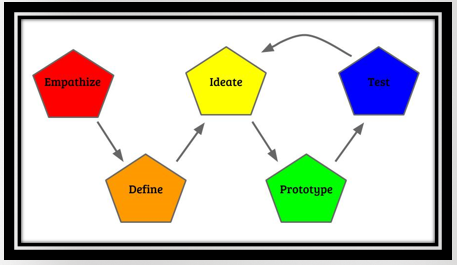
The video tugged my heartstrings and made me ponder the impact of empathy and compassion as it relates to innovation. According to the Institute of Design at Stanford, known as Stanford d.school, empathy is not only an integral part of the design thinking process, it’s the very first step. “To create meaningful innovations, you need to know your users and care about their lives.” (Download “An Introduction to Design Thinking PROCESS GUIDE” to learn more.)

I wanted to bring this concept of Innovative Kindness into the classroom, so I created a lesson that would showcase examples of innovations sparked by the kindness of others then lead into a discussion of empathy and compassion.

With students in Mrs. Cross’, Mrs. Miller’s, and Ms. Miller’s classes, we viewed the video of the color-blind man then watched another video of a cat whose owners created a wheeled attachment for his paralyzed hind legs, adding ramps throughout their house to overcome climbing steps. His owners even adapted their innovation to include a handle, so they could assist their feline when he had to climb multiple steps in a row.

We discussed those key words: empathy and compassion. For nine and ten year olds (and even adults!) the words are sometimes used interchangeably. We spent several minutes showing how empathy – that feeling of relating to someone else’s struggle or pain – can lead to compassion, which is empathy in action. We then related those words to the design process, how kindness in action sparks innovation.

Katie Martin reinforces this concept in her book, Learner Centered Innovation: Spark Curiosity, Ignite Passion, and Unleash Genius: “When we empower learners to explore and learn how to make an impact on the world, we inspire problem-solvers and innovators.”

Our classroom conversations shifted to the power of innovation in making the world a better place for others. I shared the graphic below as an introduction to the 17 Sustainable Development Goals (SDGs) of the United Nations.

SDG poster courtesy of https://sustainabledevelopment.un.org/sdgs

We discussed world problems and their impact on humanity. We shined a light on our lives in the United States and the many things we might assume others have like water fountains and quality education. We pondered the challenges that children in other countries face daily.

We then decided that we wanted to change the world, too.

Offering students the choice to work independently, in pairs, or with a small group, we challenged them to identify a problem and create a solution, focusing on the who before the what.

We provided Design Crews with a note sheet to record their planning, then we set them loose in our Innovation Lab’s makerspace – free to use any materials for any purpose. The greatest constraint they faced was time; they only had 20 minutes to create a plan of action and design a prototype.

To download this FREE template, visit http://bit.ly/KindTempShare.

It was incredible to see how quickly our students dove into this activity. They were so engaged! Their collaborative efforts quickly came together as they communicated with the group, one person often refining the ideas of another after testing out their prototype.

Pondering the possibilities
Deep in discussion
Makerspace supplies
Crafting the prototype

Their excitement was contagious! They all wanted to share their innovations that would improve lives of people, land animals, and aquatic life. With the remaining time in class, we guided students in using Flipgrid (many for the very first time!) to capture their creations with voice and video.

Recording their innovations on Flipgrid
They loved seeing each other’s videos!
To view student videos, visit https://flipgrid.com/0a92a047

Many times teachers are hesitant to dive into hands-on projects citing lack of time or availability of resources. However, to transform learning experiences for students, we must make student agency a priority. In Learning Transformed: 8 Keys to Designing Tomorrow’s Schools, Today, Tom Murray and Eric Sheninger challenge us to “empower kids to own their learning (and school) through greater autonomy. It is driven by choice, voice, and advocacy.” When you find value in designing lessons with this purpose, you find a way to make it happen.

Through our Innovative Kindness lesson, students had an opportunity to take grade-level state standards and apply them in new, unique ways. They made connections to prior content regarding conservation, natural resources, and recycling. They also practiced the 5 C’s of communication, collaboration, creativity, critical thinking, and citizenship, all within the confines of one sixty-minute class period.

There are many creative ways to shine a light on kindness with your students. You might design a Kindness Scavenger Hunt like Laurie McIntosh in Canada or create a month-long virtual Kindness Read-Aloud like Karen Caswell in Australia. You could even introduce kind acts to your students by having them participate in The Great Kindness Challenge January 28 – February 1 by signing up your school and downloading a printable checklist to complete at school or home. (Many more kindness ideas to come when A Passion for Kindness is released next month!)

I would love to know ways you are shifting the focus towards student agency and innovation in your lessons. Comment below and share your inspirations! Together we can transform learning, one lesson at a time!

Subscribe

Don't miss a post! Opt-in for blog posts to be sent straight to your inbox!